
9 Everyday Car Insurance Exclusions That Catch Drivers Off Guard
Consumables, mechanical breakdown, drunk driving, and the other real reasons claims get denied — not just accidents you never had.
Co-Founder · Letsbima.com
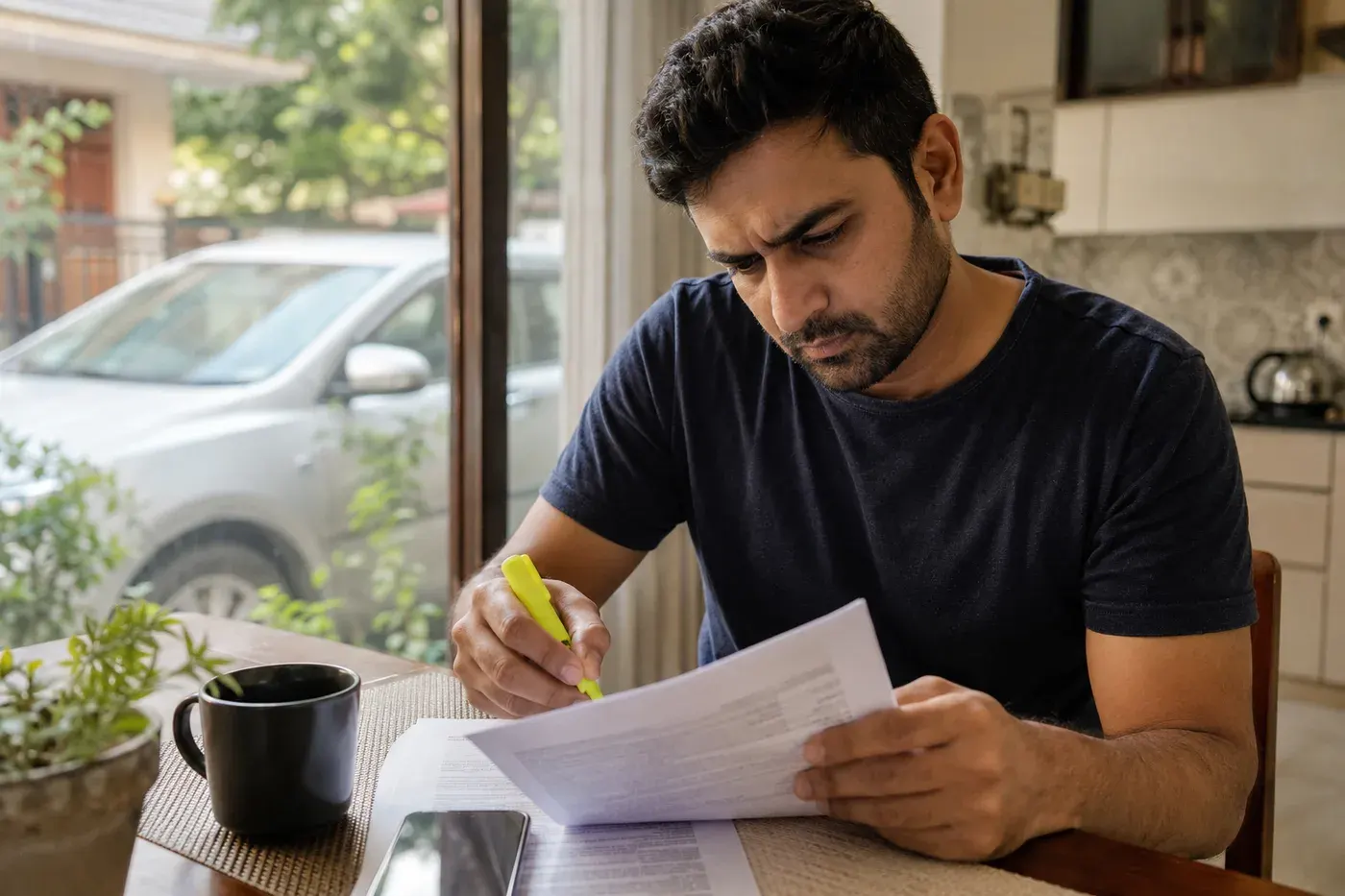
"Comprehensive" is a reassuring word, and it leads many drivers to assume it means everything is covered. In practice, every comprehensive motor policy in India carries a standard set of exclusions under IRDAI-approved wording — and the most expensive one to discover the hard way tends to show up during the monsoon, not during an actual collision.
Compare Car & Bike Insurance
Check which motor plans bundle Engine Protection and consumables cover as standard.
01Comprehensive Doesn't Mean Everything Is Covered
Comprehensive motor insurance combines own-damage and third-party liability cover — it is not an "all-risk" policy. A standard exclusions list applies across insurers, with some exclusions only closable by purchasing a specific add-on.
02Nine Everyday Exclusions Drivers Miss
Most of these are not obscure edge cases — they come up in ordinary, everyday driving situations far more often than people expect.
Standard Exclusions in a Comprehensive Policy
- Driving under the influence of alcohol or drugs.
- Driving without a valid license, or a license that does not cover the vehicle class.
- Normal wear and tear, or mechanical and electrical breakdown.
- Damage occurring outside the geographical area specified in the policy.
- Consequential loss — for example, engine damage caused by continuing to drive after a warning light or stall.
- War, nuclear risk, and general contractual liability.
- Depreciation on parts, unless a zero-depreciation add-on is active.
- Damage sustained during a race, speed contest, or established reckless driving.
- Using a private, personal-use vehicle for commercial or hire purposes without the correct policy type.
03The Consequential Damage Trap
The most common real-world version of this: a car stalls in waterlogged monsoon roads, and the driver restarts the engine to try to keep moving. Water drawn into the intake causes a hydrostatic lock, seizing the engine. Insurers classify this as consequential or negligent damage — not a direct accident — and it is excluded under a standard comprehensive policy unless an Engine Protection add-on is active.
Estimated engine repair/replacement cost: ₹1,80,000
04How to Actually Verify What Is Excluded
The policy certificate you receive by email rarely lists the full exclusions — those live in the detailed policy wording document, which is worth requesting and actually reading once a year.
Exclusions Verification Checklist
- Request the full policy wording document, not just the certificate or schedule.
- Confirm whether Engine Protection, Consumables, and Zero-Dep add-ons are active on your specific policy.
- Check that the declared geographical coverage area matches where you actually drive.
- Never restart a stalled engine in waterlogged conditions — tow it instead.
- Re-verify your exclusions at every renewal, since insurers periodically revise add-on terms.
Got Questions?
Frequently Asked Questions
Clear answers to common questions about this policy clause.
Need help evaluating your policy?
Book a free, 1-on-1 consultation with a licensed LetsBima advisor to review your existing policy or audit fine-print traps.
Explore More Essential Guides
Plain-English insurance intelligence from our research desk.

The ₹5,000 Room Rent Trap: Why It Costs You Lakhs
How a tiny 1% room limit quietly slashes your surgery, ICU, and doctor payouts by 50% or more.

Forgot to Declare BP or Thyroid? What Happens to Your Claim
The truth about medical history, Section 45 rules, and how to avoid claim rejection.